AI in Recruitment in 2026: What Actually Works
AI is now useful in recruitment, but not uniformly trustworthy across the process. LinkedIn shows that AI-assisted messaging improves candidate acceptance rates by 44%, while Microsoft reports large capacity gaps and rising pressure on workforce productivity. At the same time, Gartner found that only 26% of candidates trust AI to evaluate them fairly, and the International Labour Organization warns that AI in HR can be distorted by biased data, unclear objectives, and opaque programming. The practical conclusion is simple: automate admin and signal detection, not accountability.
Where AI clearly adds value
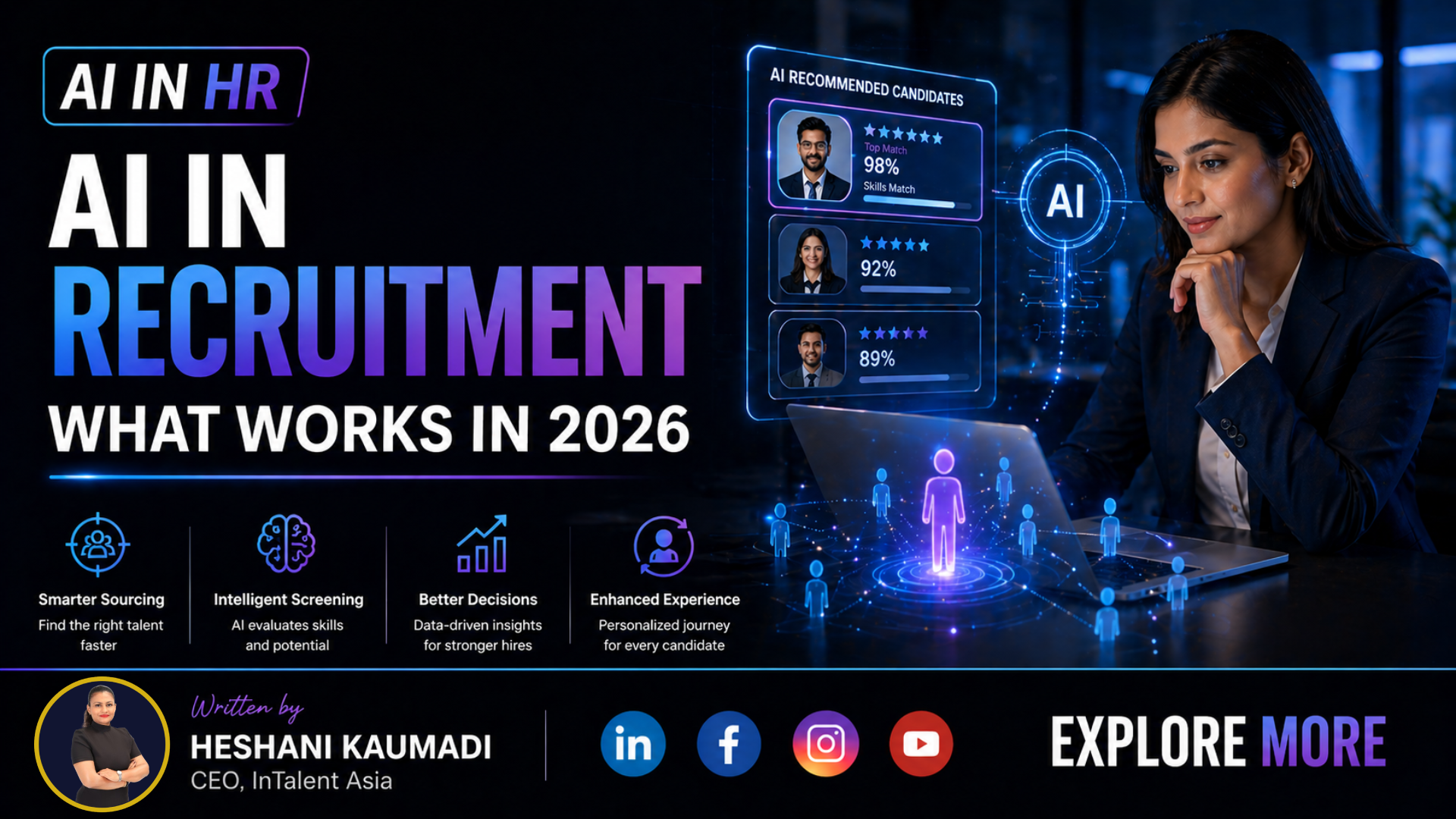
AI already works well in sourcing support, job-description drafts, candidate matching, outbound messaging, interview scheduling, note summarization, and search refinement. Those are pattern-heavy tasks where speed matters and the cost of machine error can be checked easily by a human recruiter. LinkedIn’s data on AI-assisted outreach makes the case especially well: better response rates, faster acceptance, and more recruiter efficiency in front-end engagement.
This is also where InTalent Asia’s positioning helps. The company publicly highlights AI-enhanced sourcing and fast recruitment delivery. That gives the article a strong, credible point of differentiation: InTalent Asia can speak about AI as a tool for better recruiter productivity, not as a replacement for recruiter judgment.
Where human judgment must stay in control
Bias, qualification nuance, context, potential, and final selection are still human decisions. Gartner’s candidate-trust research is the clearest warning signal. Half of candidates believe AI screens their information, but only a quarter trust it to do so fairly. The International Labour Organization’s work on AI in HR goes further, arguing that flawed objectives and weak transparency can reinforce inequality and create legal and ethical risks.
That means AI should support recruiters, not replace them. A sensible operating rule is: let machines rank and summarize; let trained humans decide and explain.
What a responsible AI recruiting workflow looks like
A strong recruiting workflow uses AI for discovery, communication support, and workflow reduction; introduces human review before rejection or shortlisting; audits outputs for bias; and informs candidates where AI is used and how review or appeal works. This is not just governance—it protects conversion, employer reputation, and hiring quality.
For B2B SEO, this article should be specific enough to be useful. Buyers want descriptive guidance, not slogans. That means including clear task boundaries and trust principles.
What leaders should do next
Start by mapping your recruitment process into three buckets: automate, assist, and human-only. Then create candidate-facing transparency language, define audit checkpoints, and train recruiters to challenge AI outputs. The call to action should invite readers to work with InTalent Asia on AI-assisted, human-led recruitment design that improves speed without weakening fairness or decision quality.
FAQ
Can AI improve recruiter productivity?
Yes. It is especially effective in sourcing support, outreach, scheduling, and summarization. LinkedIn’s data shows measurable gains in candidate engagement when AI assists recruiters.
Why are candidates skeptical of AI hiring?
Because fairness and transparency remain unclear. Gartner found only 26% of candidates trust AI to evaluate them fairly.
What should stay human-led?
Shortlisting judgment, final selection, bias review, and any decision that materially affects a candidate’s outcome.
References
Where AI clearly adds value
AI already works well in sourcing support, job-description drafts, candidate matching, outbound messaging, interview scheduling, note summarization, and search refinement. Those are pattern-heavy tasks where speed matters and the cost of machine error can be checked easily by a human recruiter. LinkedIn’s data on AI-assisted outreach makes the case especially well: better response rates, faster acceptance, and more recruiter efficiency in front-end engagement.
This is also where InTalent Asia’s positioning helps. The company publicly highlights AI-enhanced sourcing and fast recruitment delivery. That gives the article a strong, credible point of differentiation: InTalent Asia can speak about AI as a tool for better recruiter productivity, not as a replacement for recruiter judgment.
Where human judgment must stay in control
Bias, qualification nuance, context, potential, and final selection are still human decisions. Gartner’s candidate-trust research is the clearest warning signal. Half of candidates believe AI screens their information, but only a quarter trust it to do so fairly. The International Labour Organization’s work on AI in HR goes further, arguing that flawed objectives and weak transparency can reinforce inequality and create legal and ethical risks.
That means AI should support recruiters, not replace them. A sensible operating rule is: let machines rank and summarize; let trained humans decide and explain.
What a responsible AI recruiting workflow looks like
A strong recruiting workflow uses AI for discovery, communication support, and workflow reduction; introduces human review before rejection or shortlisting; audits outputs for bias; and informs candidates where AI is used and how review or appeal works. This is not just governance—it protects conversion, employer reputation, and hiring quality.
For B2B SEO, this article should be specific enough to be useful. Buyers want descriptive guidance, not slogans. That means including clear task boundaries and trust principles.
What leaders should do next
Start by mapping your recruitment process into three buckets: automate, assist, and human-only. Then create candidate-facing transparency language, define audit checkpoints, and train recruiters to challenge AI outputs. The call to action should invite readers to work with InTalent Asia on AI-assisted, human-led recruitment design that improves speed without weakening fairness or decision quality.
FAQ
Can AI improve recruiter productivity?
Yes. It is especially effective in sourcing support, outreach, scheduling, and summarization. LinkedIn’s data shows measurable gains in candidate engagement when AI assists recruiters.
Why are candidates skeptical of AI hiring?
Because fairness and transparency remain unclear. Gartner found only 26% of candidates trust AI to evaluate them fairly.
What should stay human-led?
Shortlisting judgment, final selection, bias review, and any decision that materially affects a candidate’s outcome.
References
- LinkedIn, “Work Change Report: AI Is Coming to Work.”
- Gartner, “Just 26% of Job Applicants Trust AI Will Fairly Evaluate Them.”
- International Labour Organization, “AI in Human Resource Management” and related summaries.
- Microsoft, “2025 Work Trend Index.”