Future of Work Strategy Requires a Human Edge
The most credible future-of-work argument in 2026 is no longer “AI will change work someday.” It is “AI is compressing planning cycles right now.” Deloitte’s 2026 Human Capital Trends says seven in ten business leaders now see speed and nimbleness as their primary competitive strategy, while Microsoft’s 2025 Work Trend Index argues that companies must rethink the nature of knowledge work itself. The World Economic Forum adds the macro context: 170 million jobs created and 92 million displaced by 2030. In other words, strategy, org design, and talent can no longer be planned on separate clocks.
Technology is no longer the whole differentiator
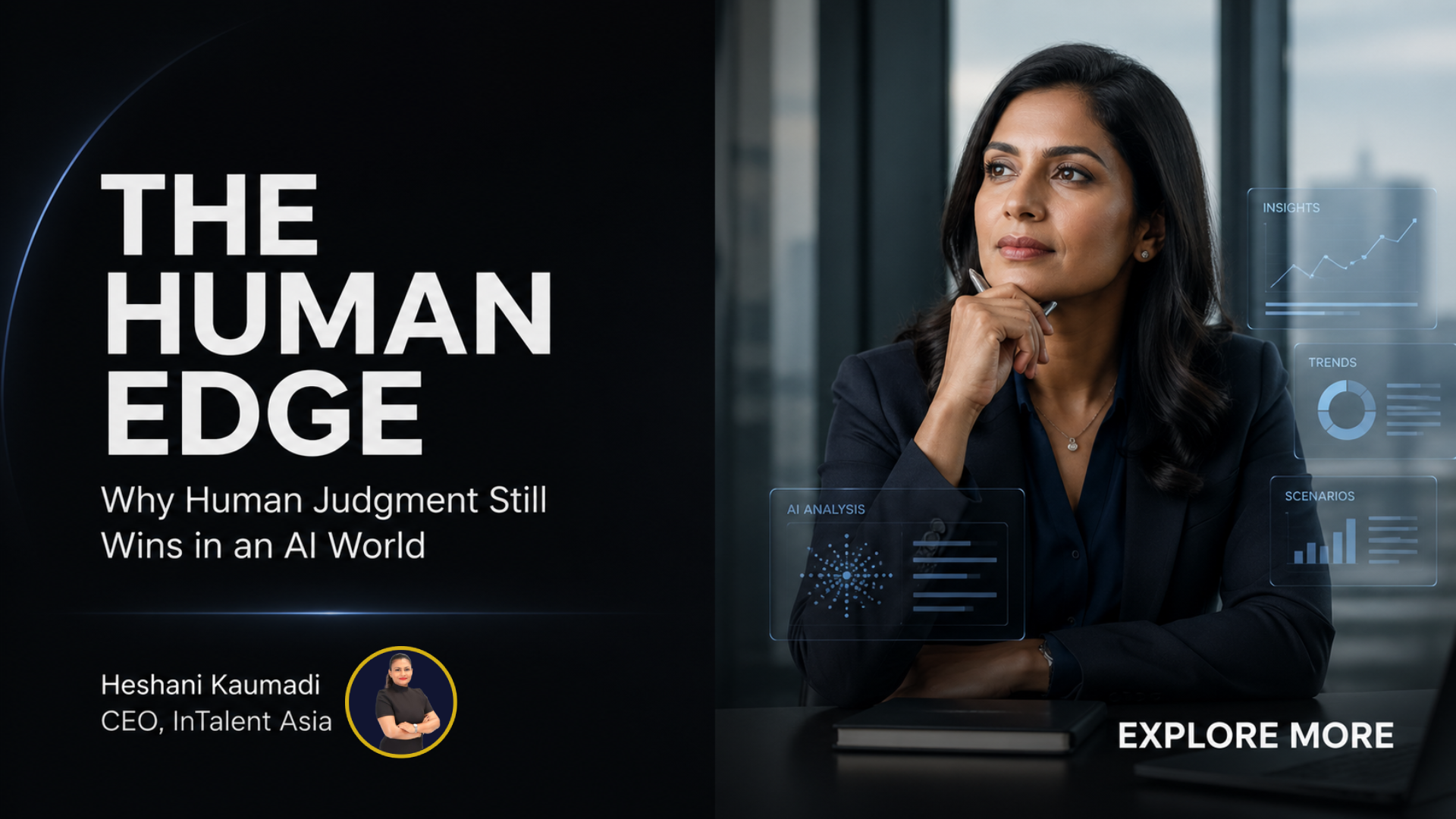
Deloitte’s 2026 framing is especially important: technology is increasingly replicable, but the “human edge” is not. That edge comes from judgment, creativity, adaptability, and the ability to orchestrate people and resources quickly under uncertainty. This is a strong message for InTalent Asia because it naturally connects executive search, workforce design, and employer brand into one strategic conversation.
Microsoft’s research supports the same conclusion from a different angle. Frontier-firm leaders are more likely to say their companies are thriving, more likely to report meaningful work, and less likely to fear AI replacing jobs. That suggests performance gains are not coming from automation alone, but from better operating models around work and human contribution.
What leaders should redesign now
First, redesign work, not just roles. Identify where AI removes low-value coordination and where human effort should shift toward relationships, decisions, and innovation. Second, redesign management. If the team is using AI but the operating cadence, escalation rules, and accountability are still built for pre-AI work, productivity will stall. Third, redesign the value proposition for talent. Workers want growth, clarity, and confidence that AI will support them rather than erode their relevance.
Why this matters commercially
Thought leadership works best when it helps a buyer diagnose a business problem. This article should do that. It should help a CEO or CHRO recognize that slow planning, unclear role architecture, and outdated talent assumptions are now strategic liabilities. Once that is clear, the call to action into InTalent Asia’s search, recruitment, and workforce solutions becomes natural rather than forced.
What leaders should do next
Ask three questions: Which work should humans stop doing? Which capabilities must the business build faster? Which leaders can actually run this transition? Then align talent acquisition, leadership hiring, and workforce design around those answers. The call to action should emphasize that InTalent Asia helps organizations hire better talent, scale faster, and build stronger teams for precisely this kind of transition.
FAQ
What is the “human edge”?
The non-replicable combination of judgment, adaptability, creativity, and collaboration that turns AI tools into business value.
Why is this a strategy issue, not just an HR issue?
Because work redesign, competitive speed, and capability renewal now drive business performance directly.
What should leaders prioritize first?
Redesign work, clarify capability needs, and upgrade leadership operating models before chasing more tools.
References
- Deloitte, “2026 Global Human Capital Trends.”
- Microsoft, “2025 Work Trend Index.”
- World Economic Forum, “Future of Jobs Report 2025.”
- InTalent Asia, homepage.